How to Pack Your Pallet: 7 Techniques to Improve Pallet Density & Stability

how to pack your pallet
Facebook
Twitter
LinkedIn
Print
Email
7 Tips for Improving Pallet Density & Stability

It takes a lot of work by a lot of people to ensure that the millions of goods shipped each day arrive at their final destinations on time and in good condition. But for every 100 shipments that arrive unscathed, there are a few that arrive in less-than-perfect condition, and sometimes, the damages sustained during shipment can be attributed to nothing more than easily avoidable packing errors.

If your business has been bitten by packing mistakes in the past, take a look at our tips for building a better pallet.

Tip 1: Heavy goods go first

When deciding how to arrange your boxes, remember that heavy items should be placed on the bottom layer. This tip will help you create a stable base with a lower center of gravity. It also helps you avoid crushing any lighter, less-dense goods.

Tip 2: Up to the edge, not over

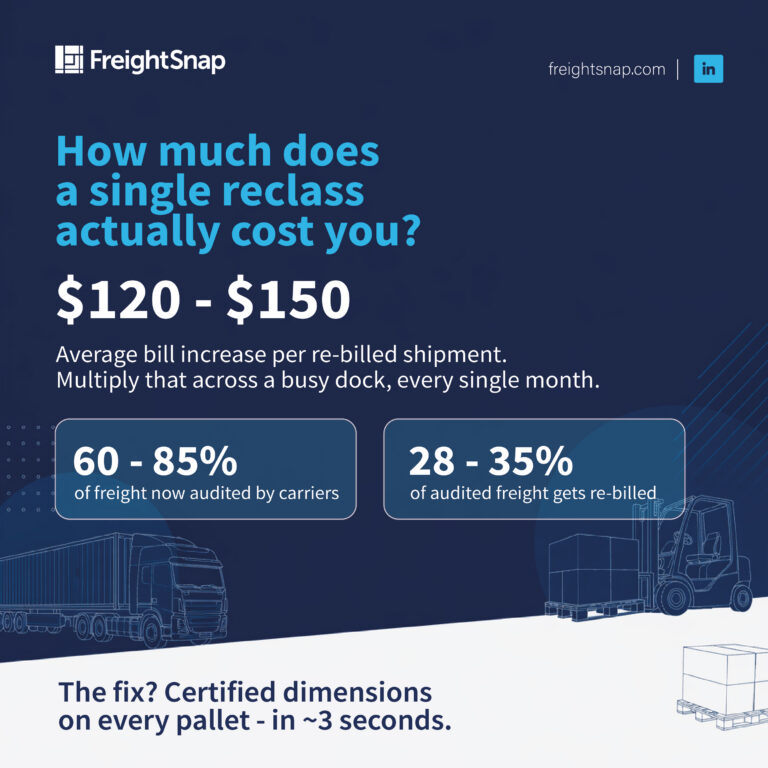
For maximum stability and pallet density, arrange your boxes in a way that brings them as close to the edges of your pallet as possible without hanging over. Bringing your boxes to the edge makes strapping goods down easier and more stable. Stacking this way also ensures you’re using as much space as possible. Any boxes or goods that overhang are more likely to be damaged or compromise overall stability. Overhanging goods can also cause automatic pallet dimensioners used by carriers to record larger length or width measurements, which can result in freight re-bills or reclassification fees.

Tip 3: Lay boxes like you’d lay bricks

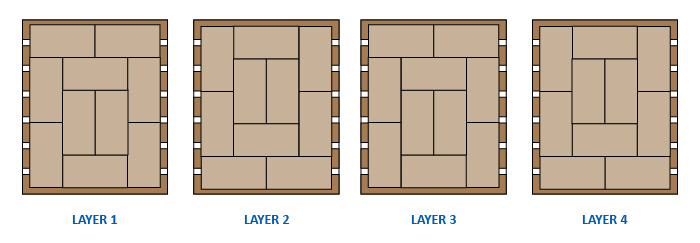
If possible, stack boxes in an overlapping brick pattern. This usually works best if you’re stacking boxes of the same size on your pallet. If unable to use the overlapping pattern, make sure you rotate each new layer of boxes you add. Examples of both patterns can be seen below. Whatever you do, avoid stacking boxes in columns with all the boxes facing in the same direction as this makes it easier for boxes to tip over or slide during transit.

Overlapping Brick
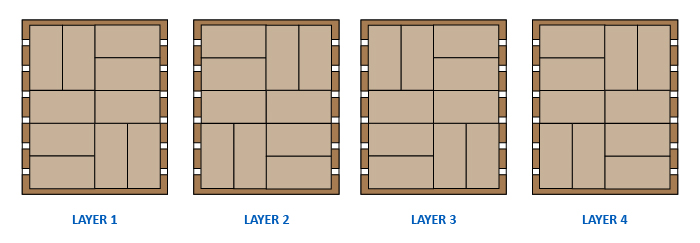
Pallet Packing Illustrations 01 How to Pack Your Pallet: 7 Techniques to Improve Pallet Density & Stability

Rotated Layers

Pallet Packing Illustrations 02 How to Pack Your Pallet: 7 Techniques to Improve Pallet Density & Stability

Tip 4: Avoid the pyramid

When stacking, many shippers make the mistake of placing smaller boxes toward the top of the pallet, causing the stack to narrow as it gets taller. This pyramid shape can compromise the structural integrity of your stack. If possible, work the smaller boxes into the stack so that the overall composition is a more cubic shape.
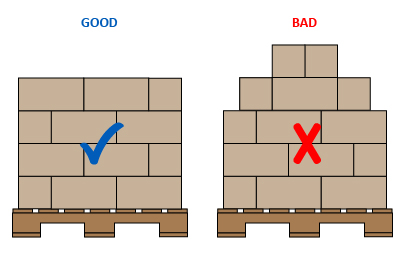
Pallet Packing Illustrations 03 How to Pack Your Pallet: 7 Techniques to Improve Pallet Density & Stability

Tip 5: Strap up

Before wrapping your freight in shrink or stretch wrap, you’ll want to strap your freight to the pallet using heavy-duty packing bands made from steel, polypropylene, rayon or polyester. Fasten your freight to the pallet using at least two straps on each side as shown below. You can also use cardboard corner boards and slip sheets for more stability.
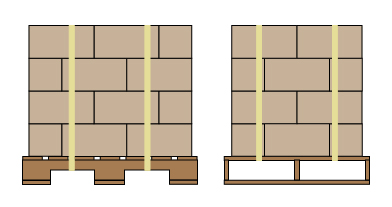
Pallet Packing Illustrations 04 How to Pack Your Pallet: 7 Techniques to Improve Pallet Density & Stability

Tip 6: Don’t skimp on shrinkwrap

Shrinkwrap secures stacked boxes on pallets, consolidating them into a single unit. If wrapping pallets by hand, tie the end of the shrink wrap to a pallet corner, then wrap from bottom to top. Include the bottom row of boxes, along with about three inches of the pallet, in your first three to four passes around the freight. As you move up the stack, wrap each new row twice, then overlap another three inches at the top. Fold the excess over the top surface. Finally, make four more passes around the middle to bottom part of the stack before cutting the wrap.

Note: If you typically wrap more than a dozen pallets per day, it may make sense to invest in a pallet wrapper. They can wrap a pallet in far less time and with greater consistency than most people can manage. They’ll also spare your back from all the bending over it takes to wrap by hand!

Tip 7: Plan ahead and rethink if necessary

The most important thing you can do to improve the way you pack pallets is to consider all your stacking options. Many companies pack their goods in boxes of a few different sizes. Before packing your next pallet, make a list of all the common box sizes your company ships, then design different packing templates for all the possible stack combinations. Make a template for boxes of all the same size, then another template for boxes of two different sizes, then three different sizes, and so on.

It may also pay to rethink the way you package and box goods. If you can ultimately reduce the amount of packing materials being used and/or use more boxes of a similar size, you may find it easier to pack pallets with better stability, strength and density.


For more articles like this, subscribe to our newsletter!

Was this article helpful?
Subscribe to our Blog

Stay up to date with our latest news, receive exclusive deals, and more.

2023 Newsletter Subscription Contact Form

Subscribe to Our Blog

Stay up to date with our latest news, receive exclusive deals, and more.

Total Transportation & Distribution, Inc. began in 1989 to provide Southern California with premier integrated transportation and distribution solutions. Total is a provider of both truckload (TL) and less than truckload (LTL) freight services. They lead the industry on the same day and next day delivery with efficiency and reliability....

Clear Lane Freight Systems was founded in 2012 by LTL (less than a truckload) industry veterans Tom Nagel and Ingi Torfason. The goal was to fill a need for economical long-haul LTL service. Ingi and Tom have the unique experience of having worked in both operations, quality, and sales management...

Challenges in Modern Shipping Shippers today are faced with all sorts of logistics challenges. Lost shipments, damaged freight, reweigh charges and size reclassifications to name a few. “Most of our Shipper customers have experienced all sorts of issues, which is why we decided to craft a great documentation solution to...

Billions of goods are shipped every day, and nearly all them are shipped on pallets. Foods, fertilizers, chemicals, car parts, children’s toys, tires — virtually anything you can think of — spends part of its life on top of a pallet. And while some organizations estimate that as much as...

Real talk: FreightSnap started by measuring rooftops. Not freight. Rooftops. Back in 2012, we built software that used Google Earth to measure roofs, yards, and walls for the home improvement crowd. We even landed a U.S. patent on it. Then some logistics folks caught wind of the tech and asked...

Let’s talk numbers, because that’s where this gets real. Manual freight measuring doesn’t fail loudly. It bleeds you quietly: → Reclassification fees on a single shipment can run hundreds of dollars — and they pile up fast across a busy dock. → Reweigh and re-measure charges hit when your numbers...

Hot take: “Dimensioners are too expensive and too much of a hassle to install” is the most expensive myth in freight. Let’s bust it. MYTH: You need a six-figure laser rig with moving parts and a specialist on speed-dial. REALITY: We build on modern infrared sensors — the same tech...

Subscribe to our Blog

Stay up to date with our latest news, receive exclusive deals, and more.

Like many large manufacturers and shippers, Allied Moulded of Bryan, Ohio, determined the importance of adding freight dimensioning to their shipping process. After a careful analysis of freight dimensioning products, they decided to install FreightSnap’s FS 5000 pallet dimensioner. With the FS 5000 now installed, Allied Moulded hopes to see...

Part of protecting your investment is documenting the condition of your freight before it’s shipped....

In a warehouse or distribution center, slotting refers to the storage and organization of goods in a manner that maximizes storage space and improves the efficiency of picking and pulling operations. It might sound complicated, but it’s actually something we all do every day, whether we know it or not....

FreightSnap is dedicated to helping our customers improve their shipping process in every way that we can. From finding the right dimensioner for your process to finding the perfect place in your warehouse to install it, even integrating it with your existing software and devices. At FreightSnap we understand for...

Real talk: FreightSnap started by measuring rooftops. Not freight. Rooftops. Back in 2012, we built software that used Google Earth to measure roofs, yards, and walls for the home improvement crowd. We even landed a U.S. patent on it. Then some logistics folks caught wind of the tech and asked...

Let’s talk numbers, because that’s where this gets real. Manual freight measuring doesn’t fail loudly. It bleeds you quietly: → Reclassification fees on a single shipment can run hundreds of dollars — and they pile up fast across a busy dock. → Reweigh and re-measure charges hit when your numbers...

Hot take: “Dimensioners are too expensive and too much of a hassle to install” is the most expensive myth in freight. Let’s bust it. MYTH: You need a six-figure laser rig with moving parts and a specialist on speed-dial. REALITY: We build on modern infrared sensors — the same tech...

Product Sheet - FS Parcel Dimensioner

2023 DimReimag LP - FSParcel PS Dwnld

Product Sheet - FS 5000 Dimensioner

2023 DimReimag LP - FS500 PS Dwnld

Request a Quote!

2023 DimReimag LP Pricing Request Form