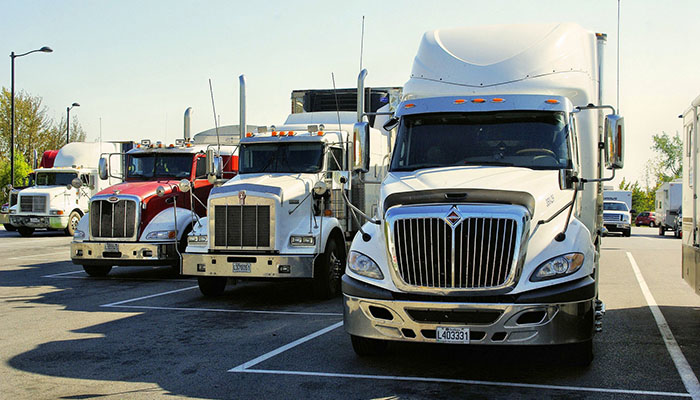
The topic of dimensional weight pricing in the LTL transport industry has been covered at length as major LTL carriers like FedEx, UPS, Old Dominion Freight, SAIA, Estes Express Lines, YRC Freight and others have started using DIM weight as a key component in their rate calculations for shippers.
In fact, many LTL’s are already using automatic pallet dimensioners to verify the accuracy of the measurements supplied by their customers, and to collect long-term dimensional data on their customer’s freight so that new pricing plans, which are fair for both parties, can be developed.
As such, it is becoming more important for shippers to develop a deeper understanding of their freight so they can identify packing inefficiencies (reducing the dimensional footprint of their shipments), and use their dimensional data to negotiate more favorable shipping rates with carriers. With detailed information about the kinds and sizes of freight a company ships, carriers can more accurately quote rates and eliminate some of the “rate padding” traditionally built in to their estimates. At this point, the best way for shippers to collect their dimensional data and catalog their freight is to invest in an automated dimensioning program.
Expected Savings On Rate Negotiations
After initiating dimensioning programs and investing in automated pallet dimensioners, we’ve seen our own shipping clients conservatively save between 1% and 2% when re-negotiating rates. Consider this – with an annual spend of $1,000,000 on shipping, a 1% to 2% savings translates to an extra $10,000 or $20,000 in your budget per year.
Other Benefits Of An Automated Dimensioning Program
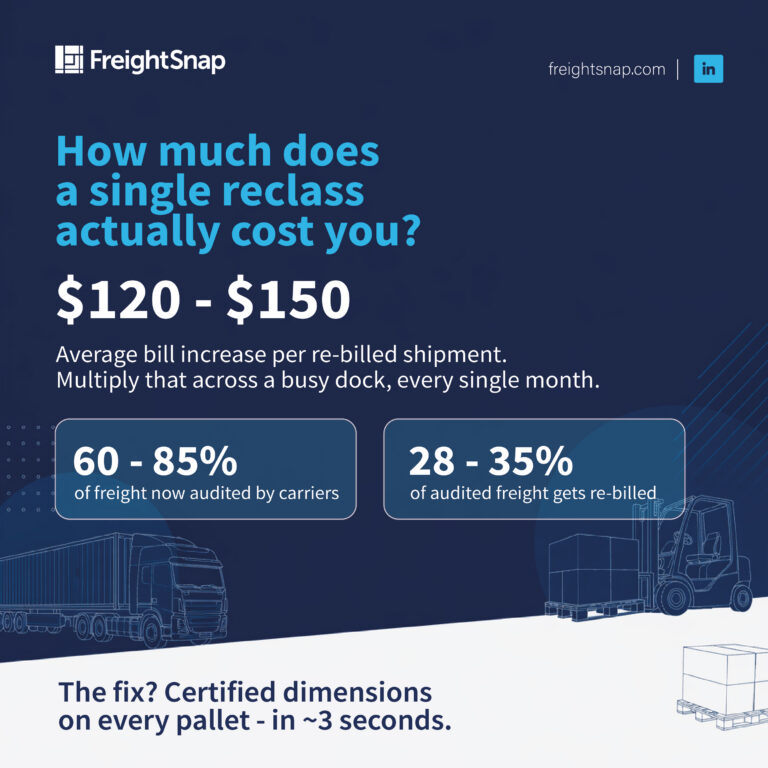
Dimensioning programs also help shippers avoid freight re-classification charges and quote adjustments (and the time spent resolving those disputes); improve their ability to collect on damage claims (pallet dimensioners take a photo to document the condition of freight when it was measured); and allow them to improve the efficiency of their freight measuring process, which can help shippers save on labor costs (a dimensioner automates the measuring and data collection process, which eliminates the need for an employee to manually measure and input data into a WMS, TMS or ERP system).
How To Implement A Dimensioning Program – Think Volume First
After you’ve done the leg-work necessary to determine the value pallet dimensioning could bring to your operation, you’ll want to lay out a plan for initiating a successful program. To do this, first ask how many pallets you’ll need to dimension each day. Consider your process.
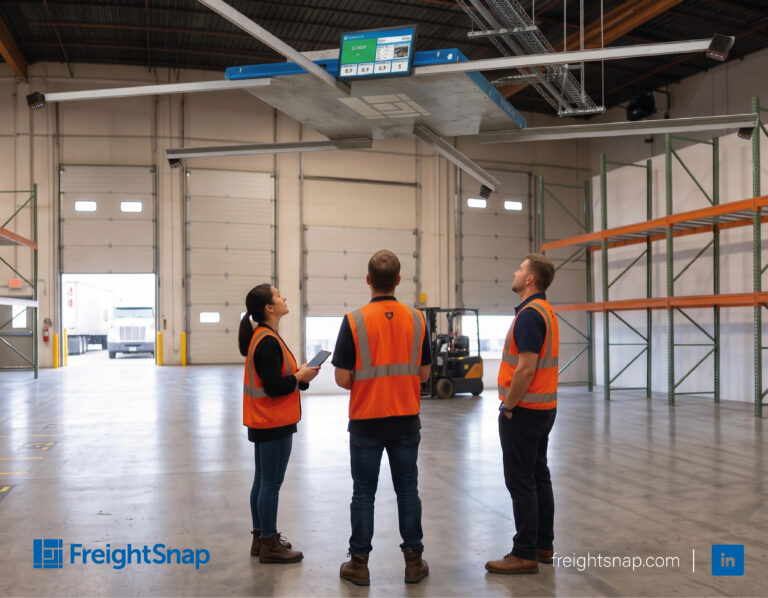
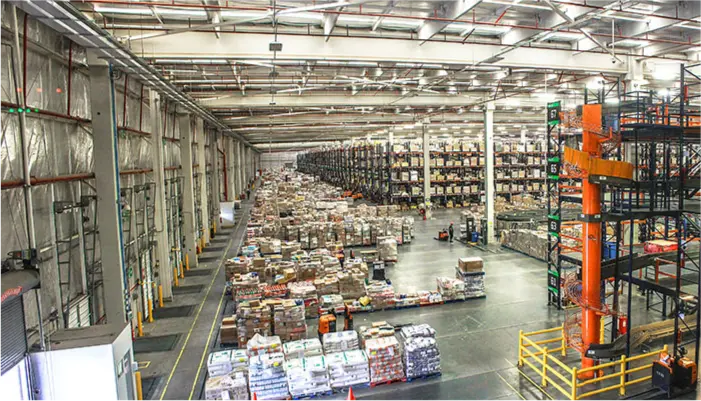
For example, carriers with hub and spoke operations need to measure a large volume of freight (sometimes thousands of pallets) in windows of just a few hours while freight moves from one trailer to the next. To achieve that volume in such restricted time frames, they must install multiple dimensioners across their docks, which allows forklift operators to avoid long drives across the facility and long lines waiting for a turn under the dimensioner.
Some high-volume shippers may work under similarly limited time frames, making an investment in multiple pallet dimensioners, either for one facility, or spread across your distribution network, an investment that yields the best results.
Alternatively, lower volume shippers with larger work windows may find that one pallet dimensioner sufficiently meets their needs.
Choose The Best Pallet Dimensioner For Your Process
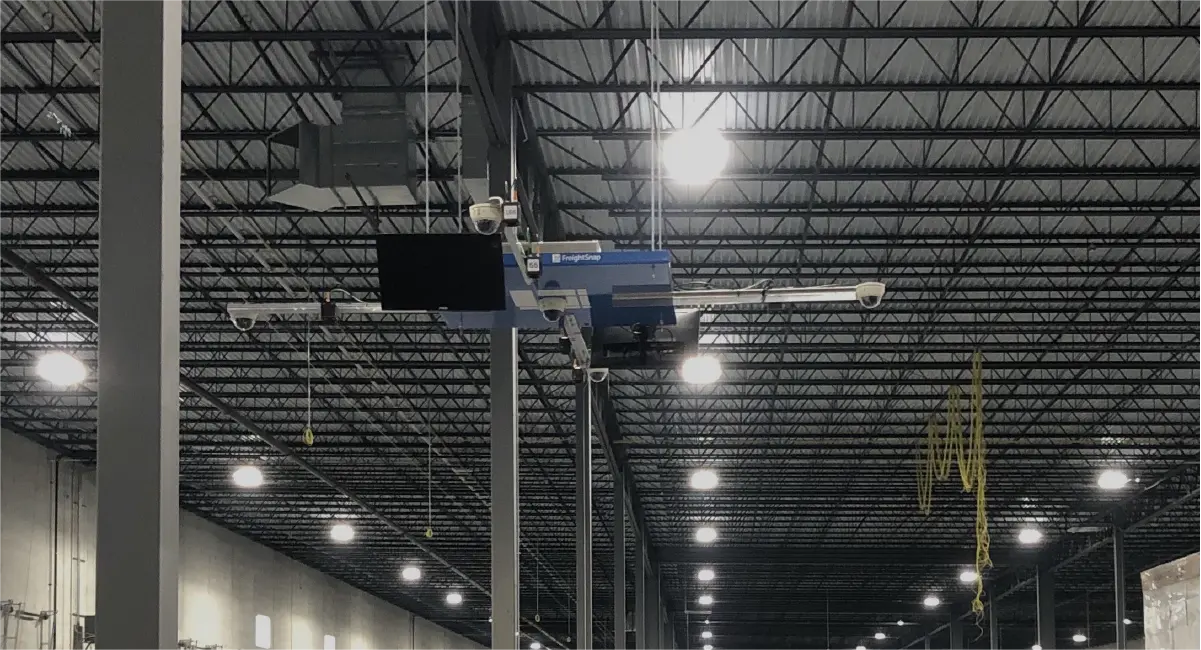
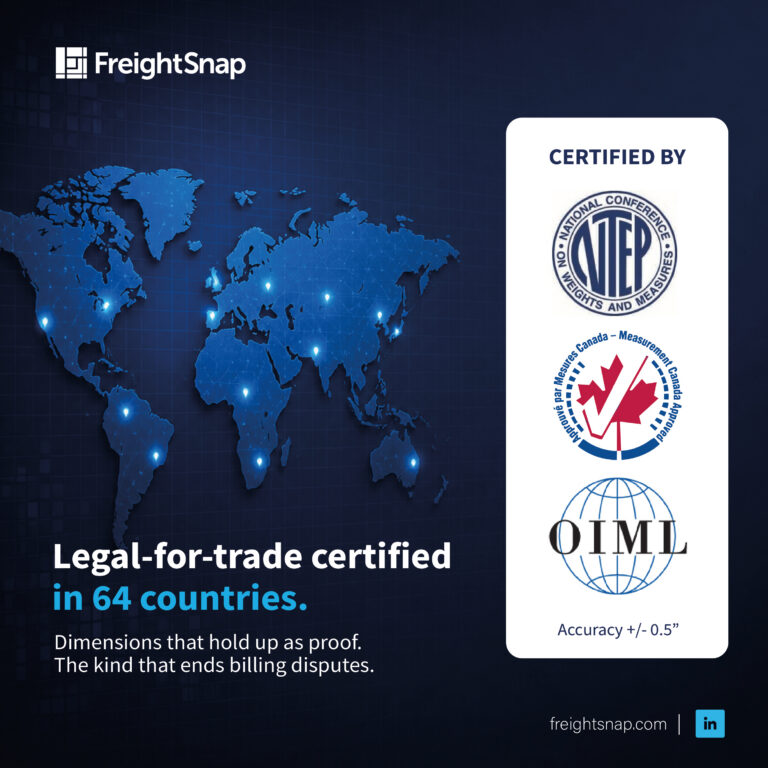
We’ve devoted an entire article to the 9 Things To Consider When Choosing A Pallet Dimensioner, which we recommend reading before you buy. However, generally speaking, you want to choose a dimensioner that can accommodate about 90% of the palletized freight sizes you ship; is accurate to within ±0.50 inches; photographs your freight for documentation; can be integrated with equipment like scales and barcodes scanners; scans freight within 3 to 6 seconds; can integrate with TMS, WMS or ERP systems; is NTEP certified; is manufactured by a company with a reputation for good customer service; and fits within your budget, which we’ll expound upon next.
Making The Most Of Your Budget
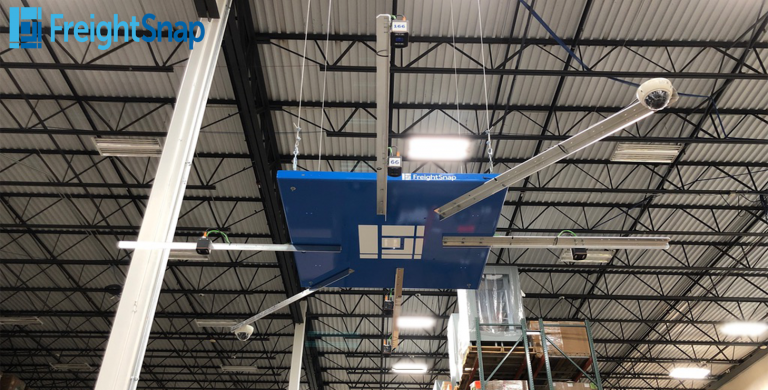
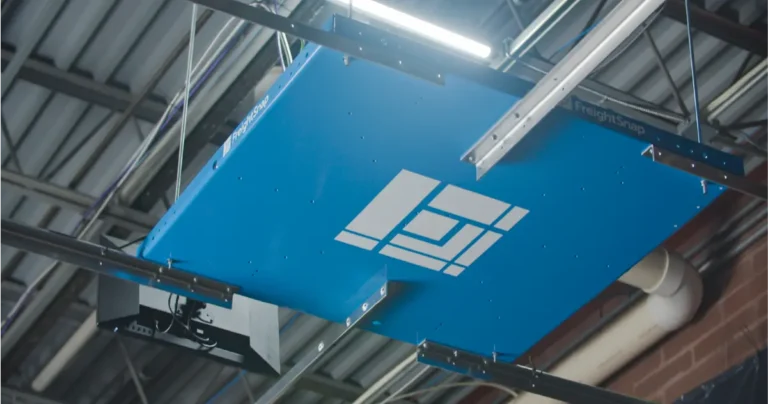
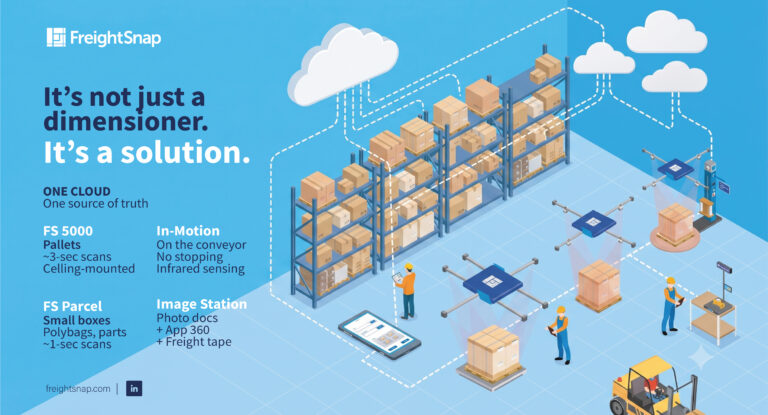
In Infrared Dimensioners Vs Laser Dimensioners: What You Should Know Before Buying, we detail the major differences between the two types of pallet dimensioners on the market today – the important difference for most companies being cost. Right now, NTEP-certified dimensioners using laser technologies can cost anywhere from $65,000 to $100,000 each, which is about three times the price of NTEP-certified infrared pallet dimensioners like FreightSnap’s FS 5000 solution. That means for the price of one laser-based pallet cubing system, you could install three FreightSnap pallet dimensioners. Obviously, for high-volume shippers like those described above – those who want to invest in multiple dimensioners – this difference in price can add up quickly.
Why The Difference In Cost? Does More Expensive Mean Better?
One would assume that a drastic difference in price must equate to a drastic difference in quality or capabilities. However, in the case of dimensioners, this simply isn’t so. In head-to-head testing, FreightSnap’s dimensioner compares favorably with laser-based units. Comparing NTEP certifications for the various dimensioners on the market also yields similar findings.
Before You Buy, Make Research A Priority
As with any major equipment investment, adequate research into your options is necessary. Some companies may assign one employee to handle the entire research and outreach process, while others may assign a team to complete the task. If you’re reading this article, you may even be one of these people yourself. It can be incredibly helpful to assign representatives from various departments (accounting, IT and operations) to your team as they will likely need to provide input at some point during the buying and installation process anyway. In our experience, getting these people involved early typically helps everything move along smoothly.