5 Operational Ideas to Improve Warehouse Productivity

5 Operational Ideas to Improve Warehouse Productivity
Facebook
Twitter
LinkedIn
Print
Email

These days, we’re all obsessed with efficiency, and for good reason. Efficiency can help us maximize profits, cut back on mistakes, and even improve worker morale by creating a less stressful, safer work environment.

So, how can we maximize efficiency inside the warehouse? These five ideas are a great place to start.

When a process slows, or becomes disjointed, poor communication is often the culprit. Ensure that any communication shared between team members, or staff and the systems they use, contains all the information needed to complete the task at hand. The more times an employee has to go back and confer with another worker, or check for additional info in a warehouse management system, the more time and productivity is lost along the way.

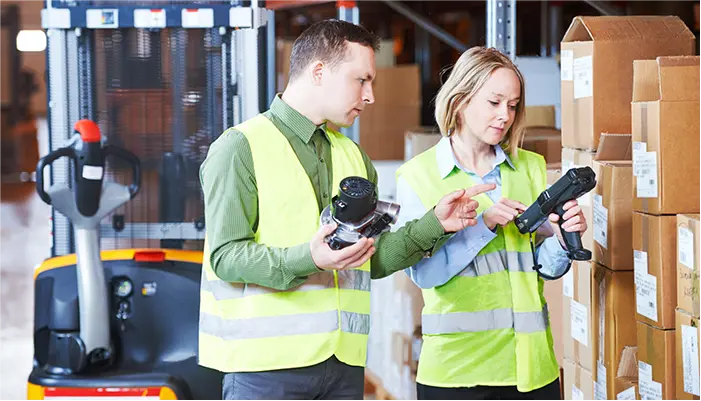
Consider using barcodes or RFID technology to capture important information on individual SKUs. Doing so, will speed up your process and reduce instances of human error that can cause a chain reaction of negative events to occur. Further, automated data systems allow you to keep all your information up to date in a centralized location where it can be accessed by anyone as needed.

This point goes along with the last. When setup correctly, an automated data system will let you know when inventory for a particular item falls below a pre-defined level, alerting you to order more. This helps you avoid product shortages and ensures that fulfillment times are always met.

The time spent walking to, or moving between different areas of the warehouse, is referred to as travel time. You can reduce this time by optimizing pick routes, rearranging areas within your warehouse based on order of activity, or by investing in automated or robotic solutions that quickly move products from one part of the warehouse to another. The more travel time can be reduced, the more productive your operation will be.

Automation has been a reoccurring theme in this article, and two areas where it can really have a big impact on productivity are your packaging and shipping processes. If your employees spend a lot of time packaging items and preparing pallets for shipments, it may pay to look at the various automated solutions out on the market. Depending on your needs, you may want to incorporate automated boxing solutions, automated pallet wrapping machines, automated pallet measuring equipment, or even fully-integrated line systems. It’s easy to spend a lot of money in these areas, so make sure you do plenty of research into the various options available, and calculate your expected ROI carefully.


For more articles like this, subscribe to our newsletter!

Was this article helpful?

Michael Eichenberg is the co-founder and CEO of FreightSnap, allowing the supply chain, logistics, manufacturing, distribution and transportation industries to measure, weigh, photograph and ID pallets and parcels in just seconds. Learn more and share your ideas on Facebook and LinkedIn.
Subscribe to our Blog

Stay up to date with our latest news, receive exclusive deals, and more.

2023 Newsletter Subscription Contact Form

Subscribe to Our Blog

Stay up to date with our latest news, receive exclusive deals, and more.

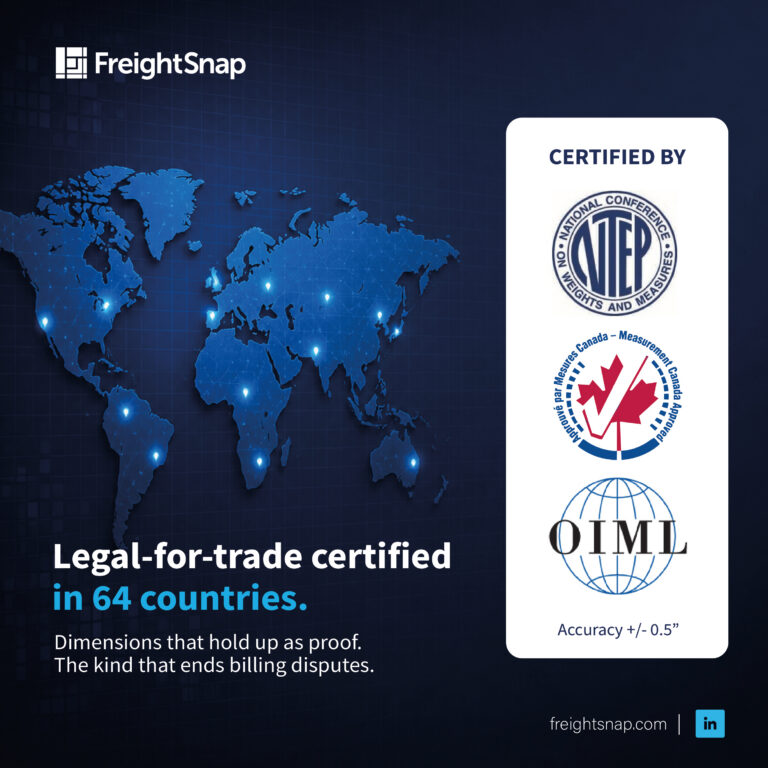
Lenexa, KS – FreightSnap’s FS 5000 pallet dimensioner has officially earned OIML certification after passing the established testing criteria for multi-dimensional measuring instruments. Having previously passed certification standards in the United States (NTEP) and Canada (Measurement Canada), the FS 5000’s recent OIML certification means that the dimensioner has now earned...

With a new year comes a whole new list of trade shows and expos to get excited about – and FreightSnap will be at a few of the big ones in January and February. First Up – SMC3’s Annual Jump Start Conference (January 22-24, Atlanta, GA) Jump Start gives attendees...

Clear Lane Freight Systems was founded in 2012 by LTL (less than a truckload) industry veterans Tom Nagel and Ingi Torfason. The goal was to fill a need for economical long-haul LTL service. Ingi and Tom have the unique experience of having worked in both operations, quality, and sales management...

In the rapid world of logistics and freight management, identifying leaders in innovation is crucial. Enter FreightSnap, your solution to warehouse automation and optimization. The FreightSnap Image Station, a groundbreaking development in automated freight documentation, is redefining the game for shippers and carriers. Join us on an exciting journey as...

Real talk: FreightSnap started by measuring rooftops. Not freight. Rooftops. Back in 2012, we built software that used Google Earth to measure roofs, yards, and walls for the home improvement crowd. We even landed a U.S. patent on it. Then some logistics folks caught wind of the tech and asked...

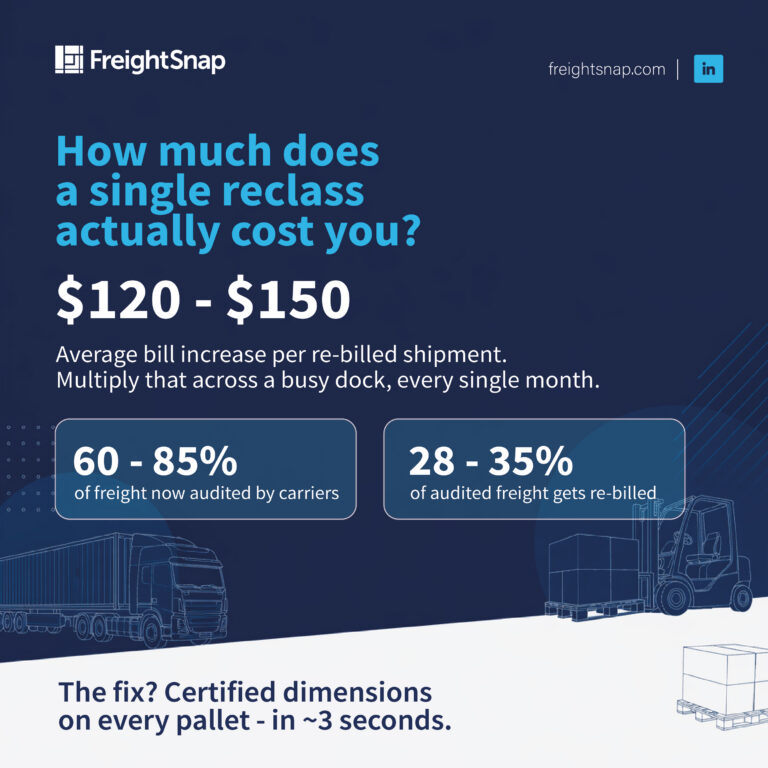
Let’s talk numbers, because that’s where this gets real. Manual freight measuring doesn’t fail loudly. It bleeds you quietly: → Reclassification fees on a single shipment can run hundreds of dollars — and they pile up fast across a busy dock. → Reweigh and re-measure charges hit when your numbers...

Hot take: “Dimensioners are too expensive and too much of a hassle to install” is the most expensive myth in freight. Let’s bust it. MYTH: You need a six-figure laser rig with moving parts and a specialist on speed-dial. REALITY: We build on modern infrared sensors — the same tech...

Subscribe to our Blog

Stay up to date with our latest news, receive exclusive deals, and more.

In a warehouse or distribution center, slotting refers to the storage and organization of goods in a manner that maximizes storage space and improves the efficiency of picking and pulling operations. It might sound complicated, but it’s actually something we all do every day, whether we know it or not....

What is Reverse Logistics? Reverse logistics is the process of planning and controlling the flow of goods from the end consumer back to the point of origin – typically the retailer, or even the original manufacturer. Having a well-thought-out, well-implemented process for handling the reverse flow of goods (returned items)...

Where you install your freight dimensioner can have a big impact on the efficiency of your operation. The following graphic lays out some basic rules regarding install location, which can help you get the most out of your automatic dimensioner. Download the PDF version to keep a copy for yourself,...

Shipping and delivery expectations are higher than ever, resulting in busier warehouses, bottlenecked docks, and increased pressure on warehouse workers. Luckily, automated warehouse technology like Dimensioners are becoming increasingly popular and can save time and increase throughput, productivity and accuracy. Purchasing dimensioning equipment can be a confusing process, and it’s...

Real talk: FreightSnap started by measuring rooftops. Not freight. Rooftops. Back in 2012, we built software that used Google Earth to measure roofs, yards, and walls for the home improvement crowd. We even landed a U.S. patent on it. Then some logistics folks caught wind of the tech and asked...

Let’s talk numbers, because that’s where this gets real. Manual freight measuring doesn’t fail loudly. It bleeds you quietly: → Reclassification fees on a single shipment can run hundreds of dollars — and they pile up fast across a busy dock. → Reweigh and re-measure charges hit when your numbers...

Hot take: “Dimensioners are too expensive and too much of a hassle to install” is the most expensive myth in freight. Let’s bust it. MYTH: You need a six-figure laser rig with moving parts and a specialist on speed-dial. REALITY: We build on modern infrared sensors — the same tech...

Product Sheet - FS Parcel Dimensioner

2023 DimReimag LP - FSParcel PS Dwnld

Product Sheet - FS 5000 Dimensioner

2023 DimReimag LP - FS500 PS Dwnld

Request a Quote!

2023 DimReimag LP Pricing Request Form