4 Ideas to Manage Warehouse Inventory More Effectively

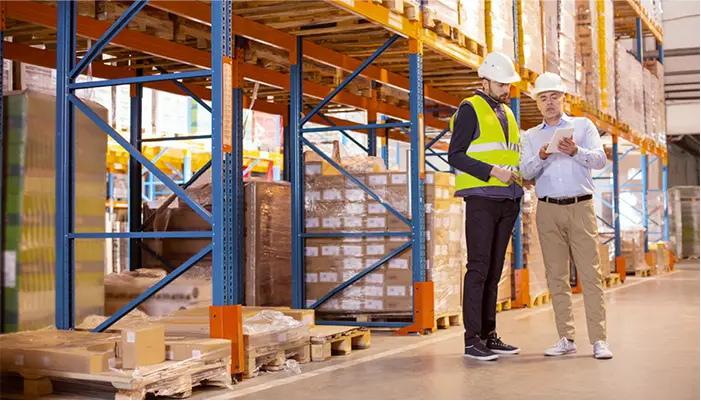
Two men discussing inventory inside a shipping warehouse.
Facebook
Twitter
LinkedIn
Print
Email

Demand for quicker delivery has put added pressure on warehouse inventory managers who are tasked with optimizing the fulfillment process so items get picked, packed, and out the door on schedule. As a result, they’re always looking for new ways to optimize operations and improve workflow within the warehouse. This article presents four ideas that can help these managers achieve their goals.

Before you decide to overhaul any part of your process or facility, make sure to get input from the people who work on the front lines of your operation – the pickers, stockers, loaders, unloaders, and drivers. They’re the ones who know your processes best (for better and worse), and the ones who are likely to be most affected by changes on a day-to-day basis. Foster an open conversation and ask them where their biggest issues arise, which tasks take the most time, and what kinds of ideas they have for improving. Ask if there are any tools or equipment that could make their jobs easier. You’ll likely learn something new or useful, and even if you don’t, the conversation itself gives your staff a chance to feel heard and may encourage more regular and productive dialog.

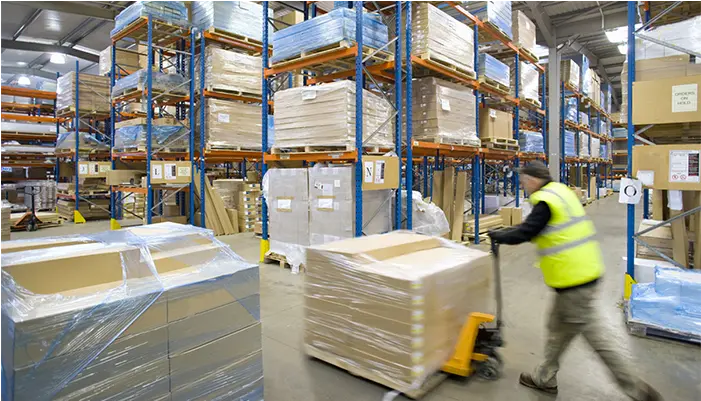
Storage space is limited inside most warehouses, which is why it’s important to maximize the vertical space you have available. If you’ve been tasked with increasing storage capacity inside an existing facility, consider building up. Products that are shipped less frequently can live near the top, while products that move fast can be kept lower where they’re easier and quicker to access.

Fulfillment trends can change regularly. Products that were your fastest movers six months ago might be sitting longer on your shelves today. It can be helpful to take yearly, semiannual, or even quarterly looks at product demand, which allows you to optimize product placement and revise your facility layout accordingly.

Loss of inventory due to damage or theft can have a huge impact on your bottom line, which is why taking steps to minimize this loss is crucial. It’s important to keep records of all your damaged goods, noting when and how they were damaged if possible. This makes asking for refunds or credits from suppliers and manufacturers to cover your losses easier. Most companies are happy to reimburse you for damaged goods in order to maintain a profitable working relationship.

If theft (internal or external) is an issue, consider investing in additional security equipment like cameras or access badges and tags. You many also look at installing checkpoints throughout your process to track product movement. This not only helps you determine where products are getting lost, but may also help you identify areas where processing mistakes are consistently made, or where products slow down for longer than they should.


For more articles like this, subscribe to our newsletter!

Was this article helpful?

Michael Eichenberg is the co-founder and CEO of FreightSnap, allowing the supply chain, logistics, manufacturing, distribution and transportation industries to measure, weigh, photograph and ID pallets and parcels in just seconds. Learn more and share your ideas on Facebook and LinkedIn.

Subscribe to our Blog

Stay up to date with our latest news, receive exclusive deals, and more.

2023 Newsletter Subscription Contact Form

Subscribe to Our Blog

Stay up to date with our latest news, receive exclusive deals, and more.

The American Transportation Research Institute (ATRI) has released its 2018 report on the Cost of Congestion to the Trucking Industry, which showed that congestion caused nearly 1.2 billion hours of delay (the equivalent of 425,533 commercial truck drivers sitting idle for an entire working year) and cost the industry more...

Shipping and delivery expectations are higher than ever, resulting in busier warehouses, bottlenecked docks, and increased pressure on warehouse workers. Luckily, automated warehouse technology like Dimensioners are becoming increasingly popular and can save time and increase throughput, productivity and accuracy. Purchasing dimensioning equipment can be a confusing process, and it’s...

Still measuring freight with a tape measure? It’s costing you more than you think. Swipe through the 5 hidden costs of manual dimensioning — and what automation actually fixes. (#4 is the one that sneaks up on people.) The good news: fixing this isn’t the budget-buster everyone assumes. Modern infrared...

Like parcel and air freight carriers, LTLs are looking less at what you’re shipping and more at how big it is. Space is the name of the game, and carriers are doing everything they can to make sure they’re getting paid for the amount that’s being used on their trailers....

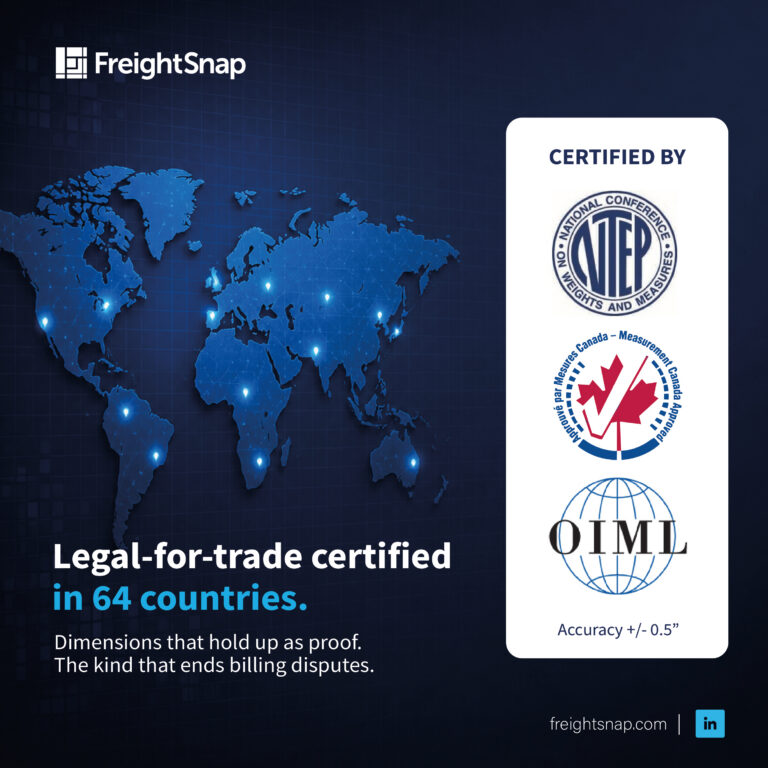
Did you know the FS 5000 is legal-for-trade certified in 64 countries? That’s not a vanity stat. NTEP, OIML, and Measurement Canada certification means your dimensions hold up as proof – the kind that ends billing disputes instead of starting them. Here’s what that certification buys you in the real...

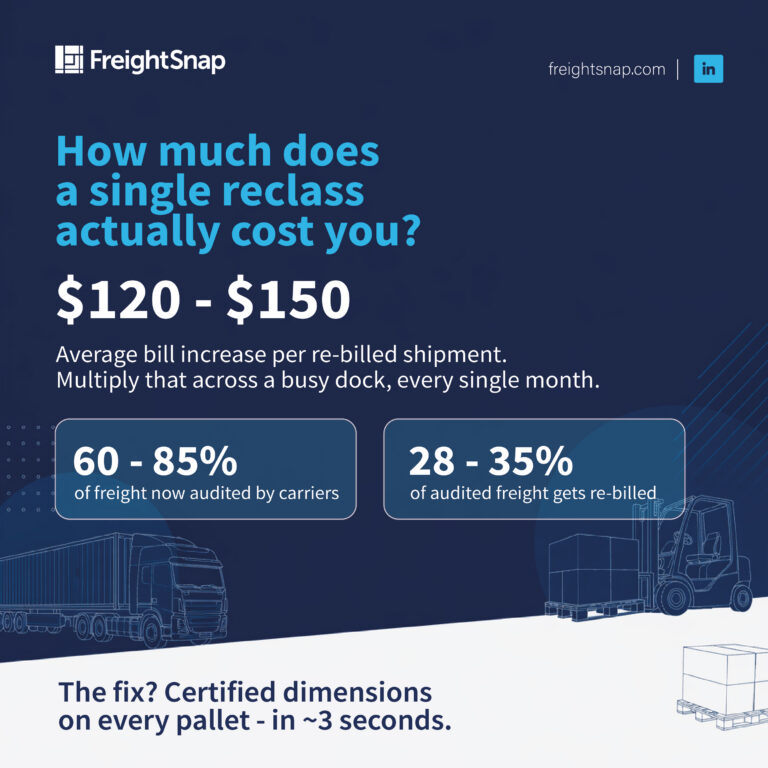
Quick question for the warehouse crowd: how much does a single reclass actually cost you? Because here’s what the numbers say. Carriers now audit 60-85% of freight. Roughly 28-35% of that gets re-billed. And the average increase lands between $120 and $150 per shipment. Multiply that across a busy dock...

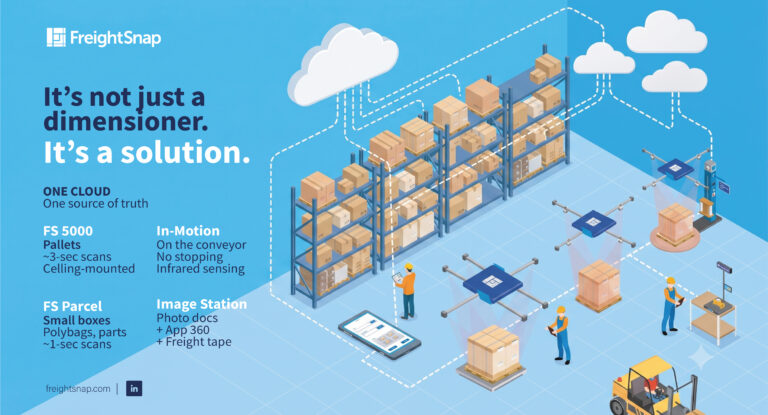
“It’s not just a dimensioner, it’s a solution.” That line does a lot of heavy lifting, so let me unpack it. When you bring in a FreightSnap dimensioner, you’re not just measuring boxes. You’re getting a system that: – Protects you from re-bills and quote adjustments with certified dimensions –...

Subscribe to our Blog

Stay up to date with our latest news, receive exclusive deals, and more.

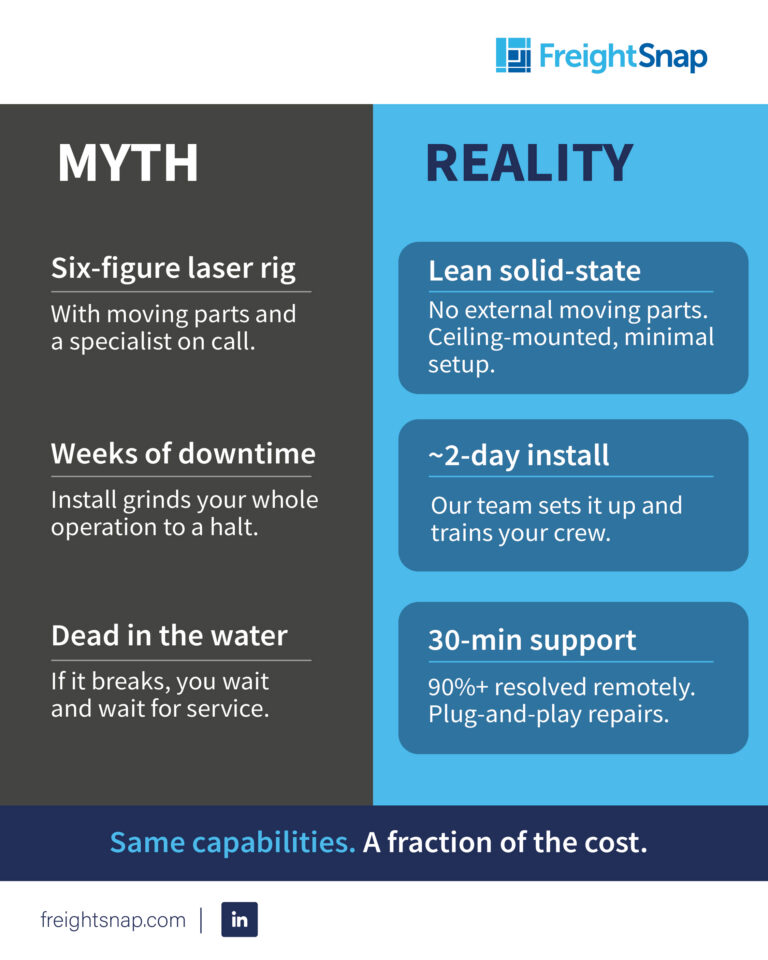
Hot take: “Dimensioners are too expensive and too much of a hassle to install” is the most expensive myth in freight. Let’s bust it. MYTH: You need a giant rig with moving parts and a specialist on speed-dial. REALITY: The FS 5000 is a lean, solid-state design with no external...

We all know things were different before COVID-19. Our lives, our businesses, and even the economy were disrupted by the pandemic, and it made us adapt to what many call a “new reality”. This new reality means that globally, businesses need to navigate disruptions in the supply chain and labor...

Brace yourselves – the holiday returns season is coming – and it’s expected to be one of the busiest on record. How busy? According to Shopify’s 2018 Holiday Ecommerce Returns Guide, 8-10% of sales will be returned to brick and mortar stores, while online businesses can expect return rates between 20-30%,...

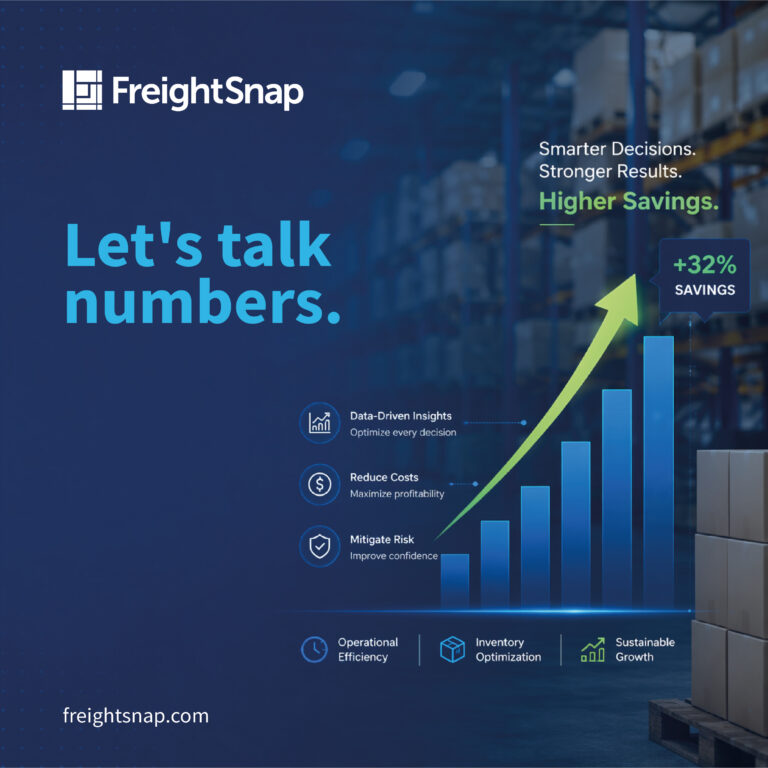
Let’s talk numbers, because that’s where this gets real. Manual freight measuring doesn’t fail loudly. It bleeds you quietly: → Reclassification fees on a single shipment can run hundreds of dollars — and they pile up fast across a busy dock. → Reweigh and re-measure charges hit when your numbers...

Did you know the FS 5000 is legal-for-trade certified in 64 countries? That’s not a vanity stat. NTEP, OIML, and Measurement Canada certification means your dimensions hold up as proof – the kind that ends billing disputes instead of starting them. Here’s what that certification buys you in the real...

Quick question for the warehouse crowd: how much does a single reclass actually cost you? Because here’s what the numbers say. Carriers now audit 60-85% of freight. Roughly 28-35% of that gets re-billed. And the average increase lands between $120 and $150 per shipment. Multiply that across a busy dock...

“It’s not just a dimensioner, it’s a solution.” That line does a lot of heavy lifting, so let me unpack it. When you bring in a FreightSnap dimensioner, you’re not just measuring boxes. You’re getting a system that: – Protects you from re-bills and quote adjustments with certified dimensions –...

Product Sheet - FS Parcel Dimensioner

2023 DimReimag LP - FSParcel PS Dwnld

Product Sheet - FS 5000 Dimensioner

2023 DimReimag LP - FS500 PS Dwnld

Request a Quote!

2023 DimReimag LP Pricing Request Form