Admittedly, the process for collecting on freight damage claims is more complicated than it probably needs to be, but that shouldn’t keep you from collecting what you’re owed. If you’re ready to stop losing money on claims collections, take a look at our top tips for being successful.
Document your freight before it’s shipped
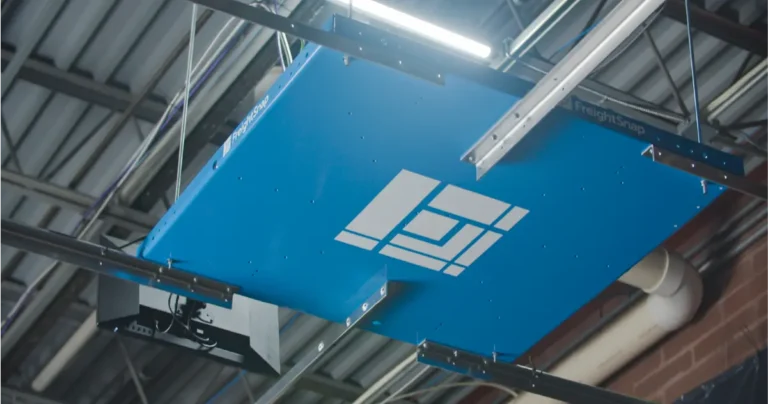
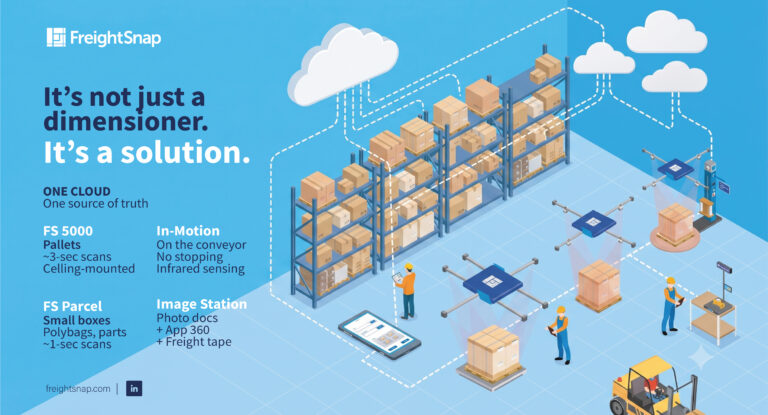
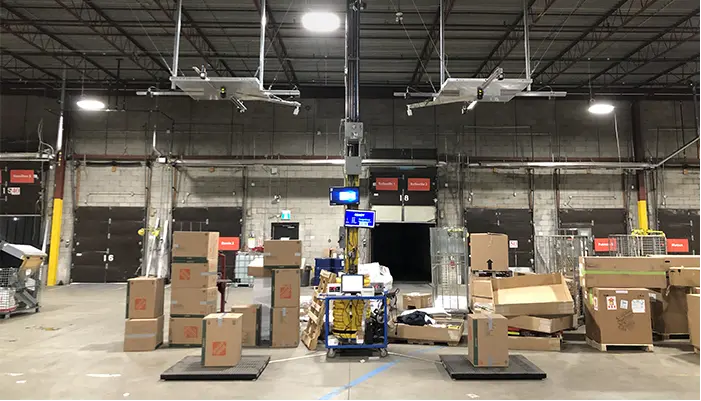
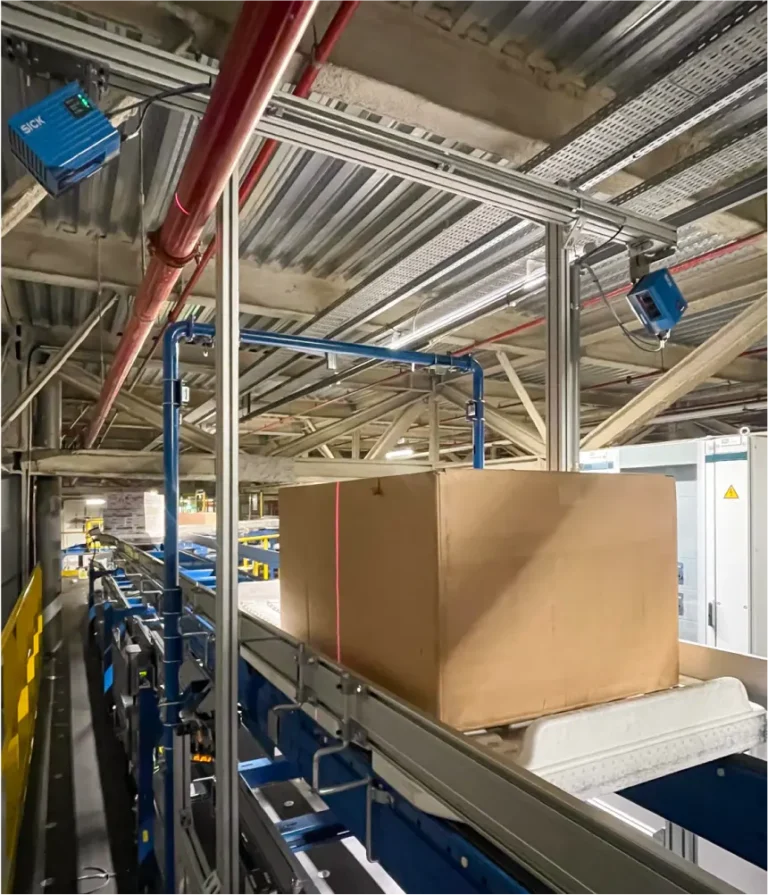
If you’re not already in the habit of documenting your freight before sending it off to the carrier, you should make it a priority. To do this, just snap a picture or two of your freight after it has been packed onto a pallet and wrapped, then catalog the pictures according to your shipping or pro number. An automatic dimensioner like the FS 5000 will document and catalog your freight automatically while it’s being weighed and measured, making the process quick and easy, and allowing you to pull a report on each shipment whenever it’s needed.
When making a damage claim, the initial burden of proof lies with the claimant, who is responsible for proving that the shipment was in good condition at origin, damaged condition at destination, and the amount of damages sustained. After proving these elements, the burden of defending against the claim shifts to the carrier.
Consider the maximum claims liability amount before shipping
In the United States, carriers are liable for the actual value of a shipment if it is damaged or lost, unless the shipper agrees to a lower amount in their contract. The “actual value” is set either by NMFC class or by a common carrier’s tariff. That said, it is common for shippers to negotiate less coverage for lower overall rates from the carrier – be aware of your contract details before shipping to avoid any surprises.
Unlike the United States, Canada and Mexico use a fixed amount of coverage per pound. In Canada, the coverage is $2.00 CAN per pound, whereas Mexico is just 2.8 cents US per pound. Given the variety, liability amounts are something every shipper should pay attention to.
Remember your bill of lading
If you haven’t worked out an alternate carriage contract with your carrier, the bill of lading will serve this purpose. Remember that any freight crossing state or international borders will be governed by the Carmack Amendment. Additionally, claim laws may vary widely between states and countries. Yours will be governed by the laws set forth in the state or country where the shipment originated.
Record any damage without delay and file your claim quickly
If part of your shipment is damaged or shorted upon arrival, make sure you document it immediately on the bill of lading. Write down any details regarding the damage, and then take pictures of the packaging and the product itself. After you’ve recorded the damage, file the claim with your carrier and inform your 3PL of the situation as soon as possible. While you technically have nine months to file before the claim is extinguished, it’s better to get the process started as soon as possible.
Your carrier also has a right to mitigate the value of the claim and rectify the situation by salvaging the goods, re-delivering items or returning the shipment. Not giving them the opportunity at the beginning of the process gives the carrier more room to deny your claim on the grounds of being uninformed from the start.
Keep the damaged freight and store it in a safe area
Don’t make the mistake of trashing damaged freight, even after it has been thoroughly documented. Your carrier has the right to do their own inspection and salvage the freight if you end up being awarded the full value of the claim. Not only that, but throwing damaged freight out before the claim has been settled can actually result in the denial of your claim.
Pay the freight bill just like you would for an undamaged shipment
There are regulations in place stating that damage claims must be accompanied by a copy of your freight bill paid in full. Even if you believe the carrier is at fault for the damage, it’s important to pay the bill upfront. Not doing so may encourage the carrier to draw out the claim process or make it more difficult than it should be to resolve. Paying the bill is not only required, but it’s a sign of good faith. After all, maintaining a professional and friendly relationship with your carrier partners can more than pay for itself down the road.
Be patient
Even if you adhere to all of the advice above, the claims process can drag on. Be patient and don’t be afraid to politely check on the status of your claim periodically. If you handle your end of the claims process correctly, you’ll give yourself the best chance to recoup your money.
For more articles like this, subscribe to our newsletter!
Was this article helpful?
Michael Eichenberg is the co-founder and CEO of FreightSnap, allowing the supply chain, logistics, manufacturing, distribution and transportation industries to measure, weigh, photograph and ID pallets and parcels in just seconds. Learn more and share your ideas on Facebook and LinkedIn.