If you’re like a lot of our clients, this is your first time buying a freight dimensioner, which means you’re not exactly sure what to expect. This short guide will help you understand the buying process, let you know what questions to ask, what answers to have on hand, and what you’ll need to think about before your unit is ever installed.
Requesting a quote
Let’s say you’ve already done your research and decided that an automated freight dimensioner is something that can improve your process and offer a significant return on your investment. Now it’s time to start reaching out to vendors for quotes. No matter who you talk to, you’ll want to provide as much detail about your operation as possible. More details will allow your vendor to deliver a more accurate quote in a shorter amount of time.
What details will your vendor be asking for? Here’s what we like ask our clients.
1) What kind of business do you operate?
We start with the basics. Are you an LTL carrier, a freight forwarder, a shipper, a 3PL? Knowing your business type tells us a lot about your general needs for the unit.
2) What kind of freight will you measure?
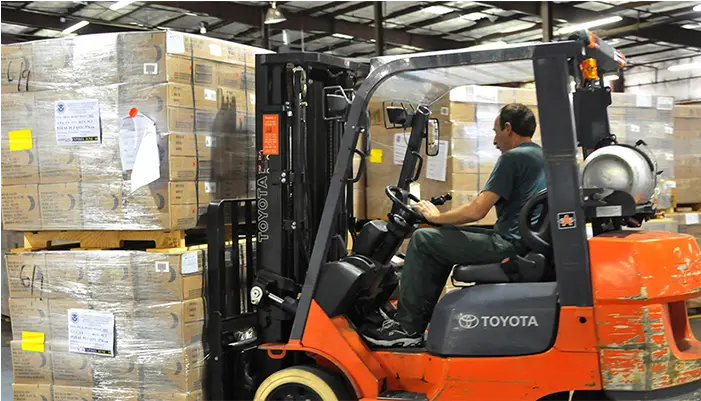
Do you ship hazardous materials? Is your freight palletized, crated, wrapped in shrink wrap, strapped down, all of the above? Do you ship cubic shapes, irregular shapes, both? How large are your largest shipments and how small are your smallest? These details will help your vendor determine the best dimensioning product for your needs, whether it’s a standard model, or a custom solution.
3) What information do you want to collect?
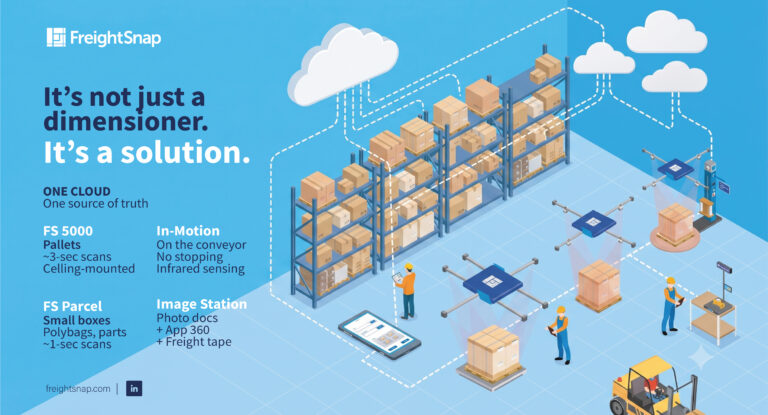
Will you want to capture weight with your measurements? If so, you’ll need to pair your dimensioner with a floor or forklift scale. Do you want the dimensioner to take a picture (or pictures) of your freight to show its condition? This will tell your vendor how many cameras they’ll need to set up. If there’s other information you want to collect, such as customer ID; receiving address; commodity type; etc., it never hurts to ask your vendor what’s possible.
4) What do you want to do with the information you collect?
Will you send your data to a WMS, TMS or ERP system? Will it integrate with other back-office software? Every dimensioning company is different, and some offer more software integration options than others. For our part, FreightSnap will integrate with virtually any client-based system or process to accommodate your needs. We also offer an optional cloud-based portal that allows customers to store and access all their shipments through a simple interface. It’s our turn-key solution for companies that don’t want to devote additional internal IT resources to store and access their data.
5) How would you like to trigger (initiate) your dimensioner?
Your answer here will depend largely on your processes. For example, if you’re an LTL carrier, freight forwarder, or 3PL, you probably use barcodes to keep track of each shipment that comes through your facility. In this case, FreightSnap can program your dimensioner to trigger when one of your operators scans a barcode tied to a shipment. Alternatively, our dimensioners can be triggered by an app, which can be installed on a mobile device, desktop computer, or forklift computer.
6) Where do you plan to install your dimensioner or dimensioners?
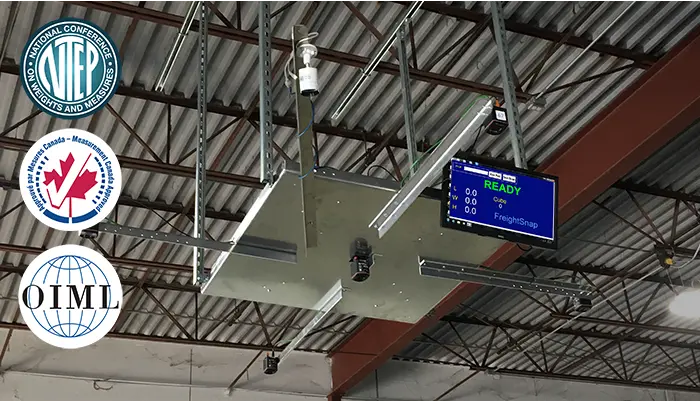
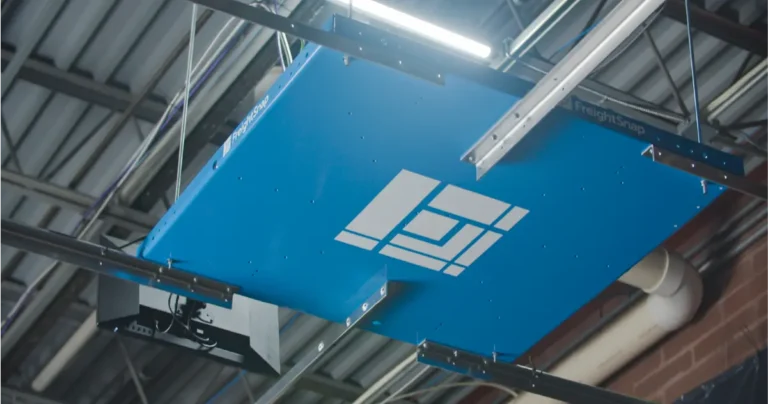
Where you install your dimensioner can make a large difference in the level of efficiency your unit delivers. Consider that a dimensioner like the FS 5000 requires at least 10 square feet of clear space directly beneath the unit. This area is called the “Measurement Zone.” Other dimensioners can require considerably more real estate, which is something to think about if you’re short on space.
In some shipping operations, you’ll only need access to your dimensioner from one side of unit. In most cases, however, especially in settings such as cross-dock trucking terminals or forwarding warehouses, it’s better to have access to the dimensioner from two sides, which encourages better traffic flow.
While FreightSnap charges a simple flat rate for installs, other companies may charge extra to account for additional materials or services needed to complete the work. Check with your vendor to learn about their installation costs.
Planning your install
After you’ve worked through the quote and agreed upon the details and pricing, it’ll be time schedule your install. Before the unit goes up, you’ll need to make sure the dimensioner has power (and internet access if applicable) nearby. At FreightSnap, we require a dedicated electrical outlet to be installed a few feet from where the dimensioner will hang. Typically, our clients will work with an electrician of their choice to complete this portion of the install. Other vendors may handle this differently.
Following the electrical install, FreightSnap will send technicians out to hang and calibrate your dimensioner, unless otherwise directed. A short training session with your team after the install is complete will ensure that your employees know how to correctly operate the unit.
And there you have it …
With your install complete, you’re ready to start dimensioning freight with your brand new automatic freight dimensioner. While there’s certainly a lot to consider before buying, we hope this guide gives you a better idea about what to expect from the buying process – from your first request, all the way through installation.
For more articles like this, subscribe to our newsletter!
Was this article helpful?
Michael Eichenberg is the co-founder and CEO of FreightSnap, allowing the supply chain, logistics, manufacturing, distribution and transportation industries to measure, weigh, photograph and ID pallets and parcels in just seconds. Learn more and share your ideas on Facebook and LinkedIn.